

What is SEO and Its Types
 Zaryab Khan
 Published: June 5, 2026
 12 Min Read.


 Listen to this article in Murfi's Voice.
Ever thought why some websites get traffic every day, while others stay completely unnoticed, even after being well designed? Many businesses face this problem. They build a professional website, add good content and still don’t see visitors, clicks or leads.
People cannot find them online because visibility is missing. That’s why SEO is important. It helps your website appear in search results when people are looking for your services.
With the right SEO strategy, your website can attract the right audience, improve rankings and generate consistent organic traffic.
Key Highlights:
- SEO helps your website rank higher on search engines
- It brings free (organic) traffic without paying for ads
- There are different types of SEO for different goals
- A strong SEO strategy improves trust and visibility
SEO is not only about adding keywords. It is about building a website that is helpful and easy for both users and search engines to understand.
What is Search Engine Optimization?
Search Engine Optimization (SEO) is the process of improving your website so that it appears higher in search engine results like Google.
When someone searches for a product or a service, search engines show the most relevant results. SEO helps your website become one of those results.
For Example, if someone searches “digital marketing services”, SEO helps your website show up on that page. The higher your website ranks, the more people visit it.
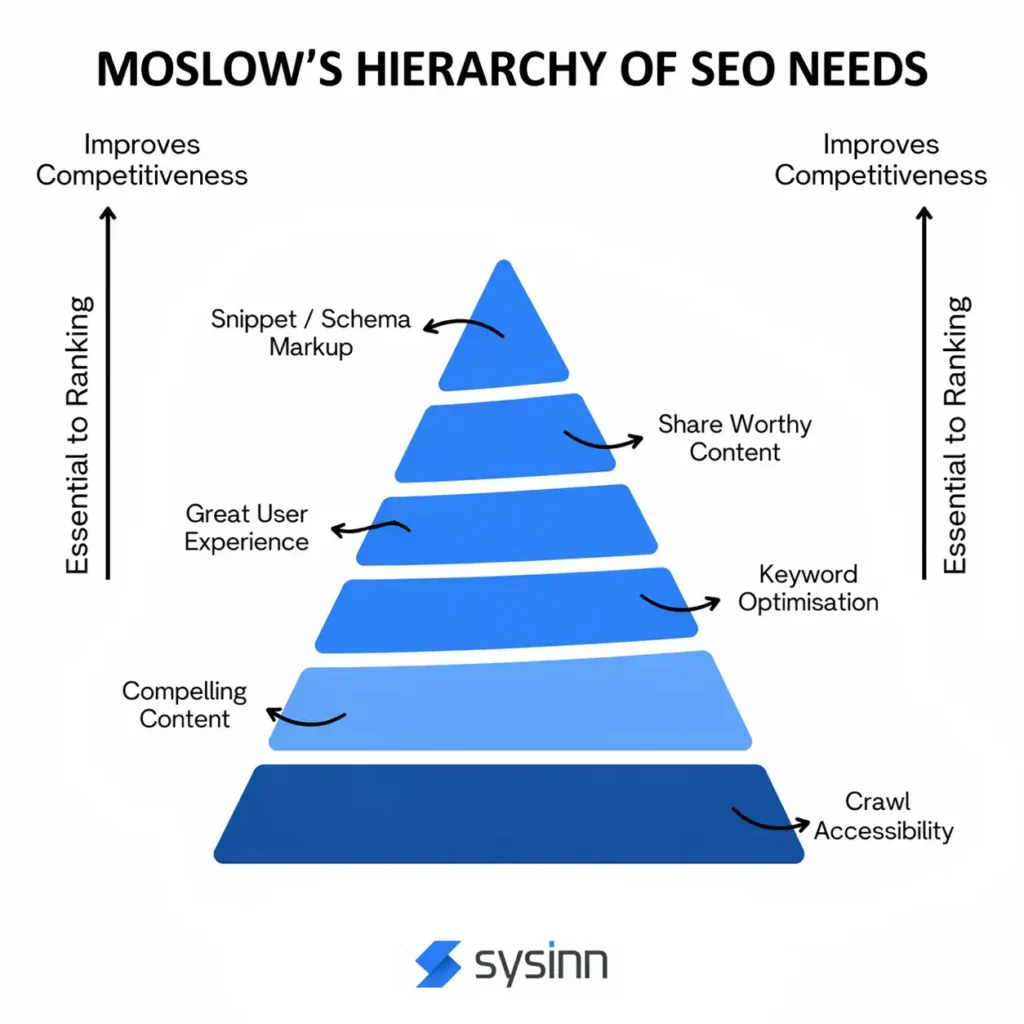
Moslow’s Hierarchy of SEO Needs highlights the essential elements for improving website ranking and competitiveness.
- Crawl Accessibility ensures search engines can access the site
- Keyword Optimization targets the right audience
- Compelling Content engages users
- Great User Experience enhances satisfaction
- Share Worthy Content drives sharing
Snippet/Schema Markup boosts visibility in search results, enhancing competitiveness
Search engines use algorithms to decide rankings. These algorithms check if your website is useful, trustworthy and relevant.
Why SEO is Important?
SEO is one of the most effective ways to grow online. It brings traffic without paying for ads every time someone clicks. Here is why businesses invest in SEO:
Brings Organic Traffic
Organic traffic means visitors come naturally from search engines. You don’t pay for each click. This helps businesses reduce marketing costs while still getting steady visitors.
Builds Trust
Websites that rank higher are often seen as more reliable. Users trust Google’s top results. A strong ranking also creates a positive first impression for new visitors.
Improves User Experience
SEO is not only for search engines. It also improves how users interact with your website. A better experience keeps users on your site longer and increases the chances of conversion.
Gives Long Term Results
Paid ads stop when your budget ends. SEO keeps working over time. Once your site ranks well, it can bring traffic for months without extra cost.
Studies from HubSpot show that over 75% of users never scroll past the first page of search results. So that’s why ranking matters.
How Do Search Engines Work?
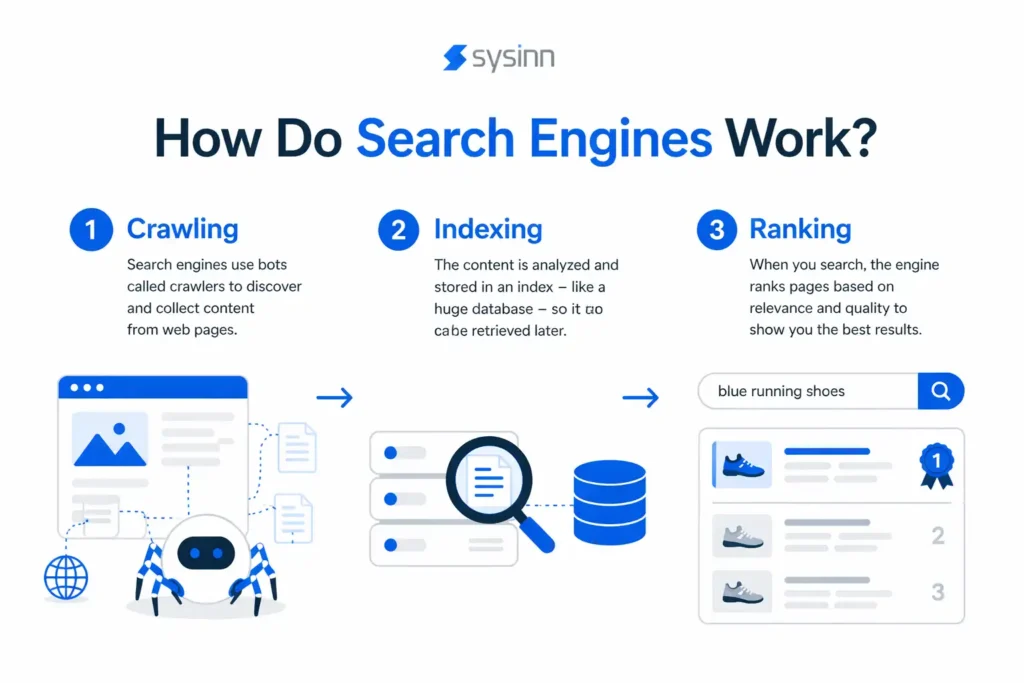
Search engines like Google follow a simple three step process to find, understand and rank websites:
- Crawling
- Indexing
- Ranking
1. Crawling
Crawling is the first step where search engines use bots (also called spiders) to discover content on the internet. These bots scan websites, follow links from one page to another and collect information about new and updated pages. If your website has proper internal linking and a sitemap, it becomes easier for these bots to find your content.
2. Indexing
After crawling, the collected data is stored in a huge database called an index. In this step, search engines analyze your content, understand what your page is about and organize it based on keywords, topics and relevance. If your content is clear, well structured and valuable, it has a better chance of being indexed.
3. Ranking
Ranking is the final step where search engines decide which pages should appear at the top of search results. They use different factors like content quality, relevance, backlinks, and website speed and user experience. The goal is to show users the most helpful and trustworthy results for their search query.
What are the Types of SEO?
Every business needs to be easy to find online. If people cannot find your website, they will go to your competitors. Learning SEO helps your business appear in search results and reach the right audience at the right time.
SEO keeps changing, but its basics stay the same. It is not only one task, but a mix of important parts that work together. When you focus on these important areas, your website performs better and gets more visibility over time.
There are the following three pillars of SEO:
- On Page SEO
- Off Page SEO
- Technical SEO
1. On Page SEO
On page search engine optimization refers to everything you do inside your website to improve rankings and user experience. It focuses on making your content relevant, structured and easy to understand for both users and search engines.
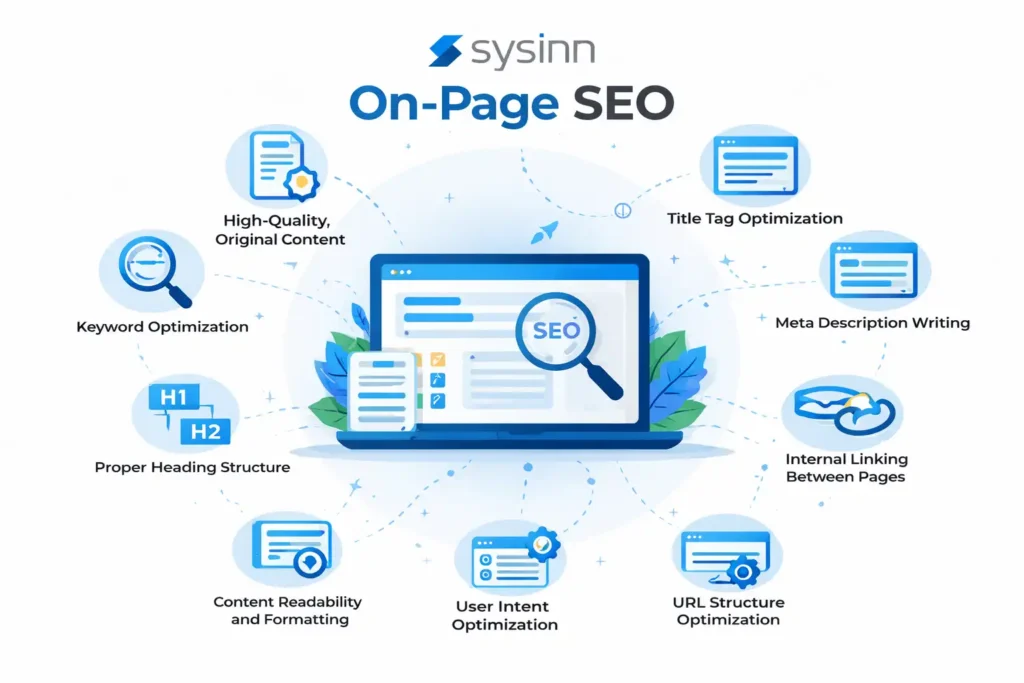
Important elements of on page SEO include:
- High quality, original content
- Keyword optimization (natural usage)
- Title tag optimization
- Meta description writing
- Proper heading structure (H1, H2, H3)
- Internal linking between pages
- Image optimization (compression + Alt text)
- URL structure optimization
- Content readability and formatting
- User intent optimization
2. Off Page SEO
Off page search engine optimization refers to actions taken outside of your website to improve its authority, trust and reputation. Google ranks websites higher when they are trusted by other websites.
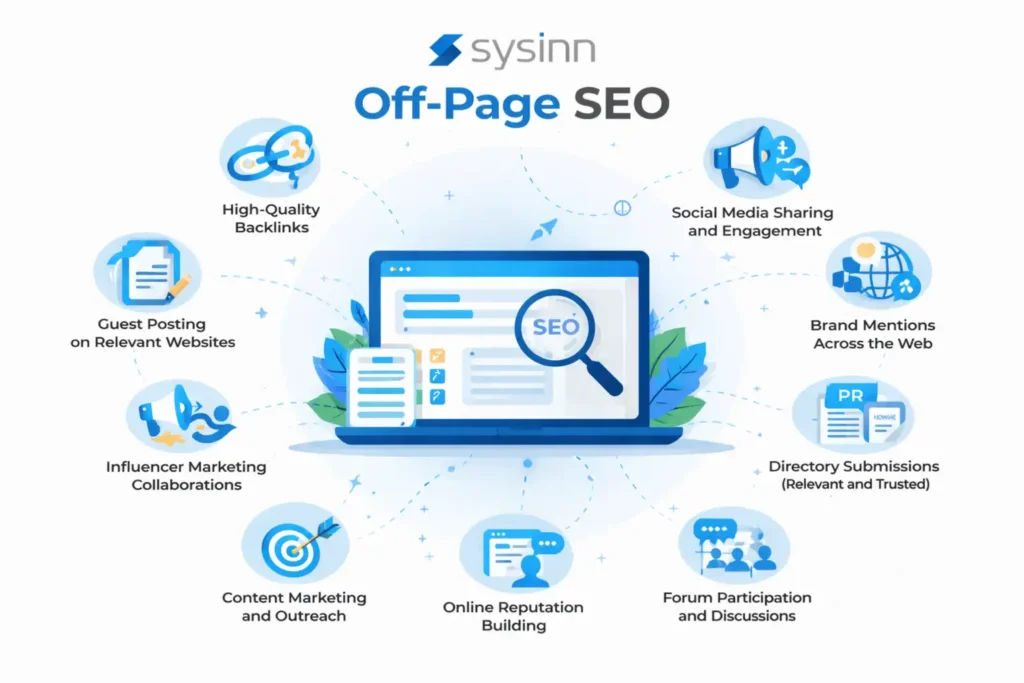
Important elements of off page SEO include:
- High quality backlinks
- Guest posting on relevant websites
- Social media sharing and engagement
- Brand mentions across the web
- Influencer marketing collaborations
- Forum participation and discussions
- Directory submissions (relevant and trusted)
- Content marketing and outreach
- Online reputation building
- PR and digital mentions
3. Technical SEO
Technical search engine optimization focuses on the backend of your website. It ensures that search engines can crawl, index and understand your website easily. Even good content will not rank if technical SEO is weak.
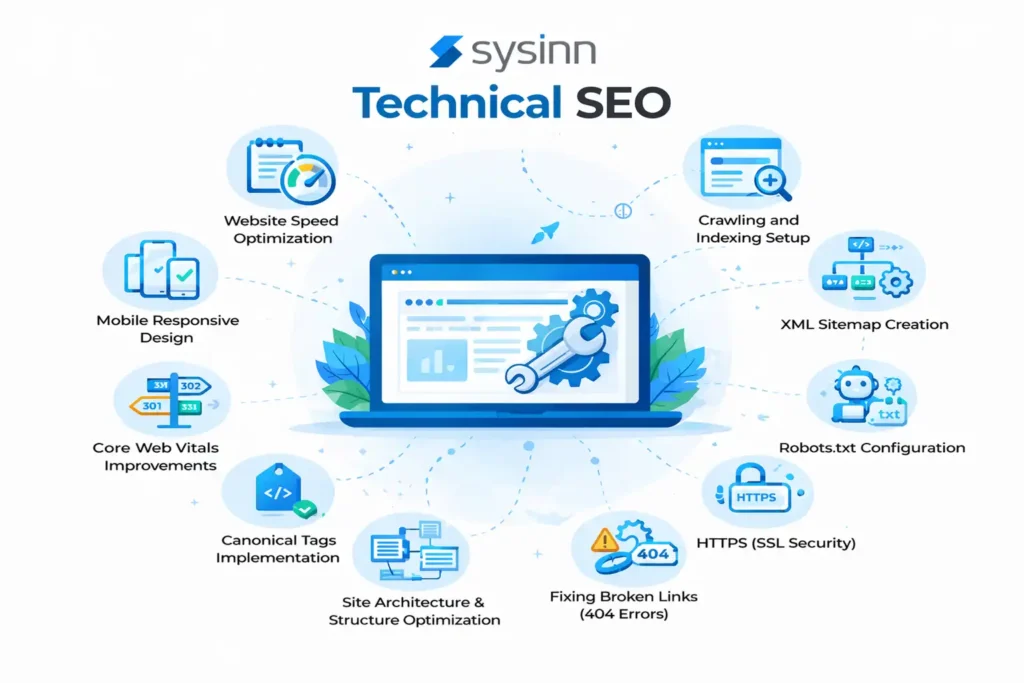
Important elements of technical SEO include:
- Website speed optimization
- Mobile responsive design
- Crawling and indexing setup
- XML sitemap creation
- Robots.txt configuration
- HTTPS (SSL security)
- Fixing broken links (404 errors)
- Redirect management (301/302)
- Canonical tags implementation
- Site architecture and structure optimization
- Core Web Vitals improvements
- Duplicate content controls
Other Types of SEO
Other types of SEO include:
Local SEO
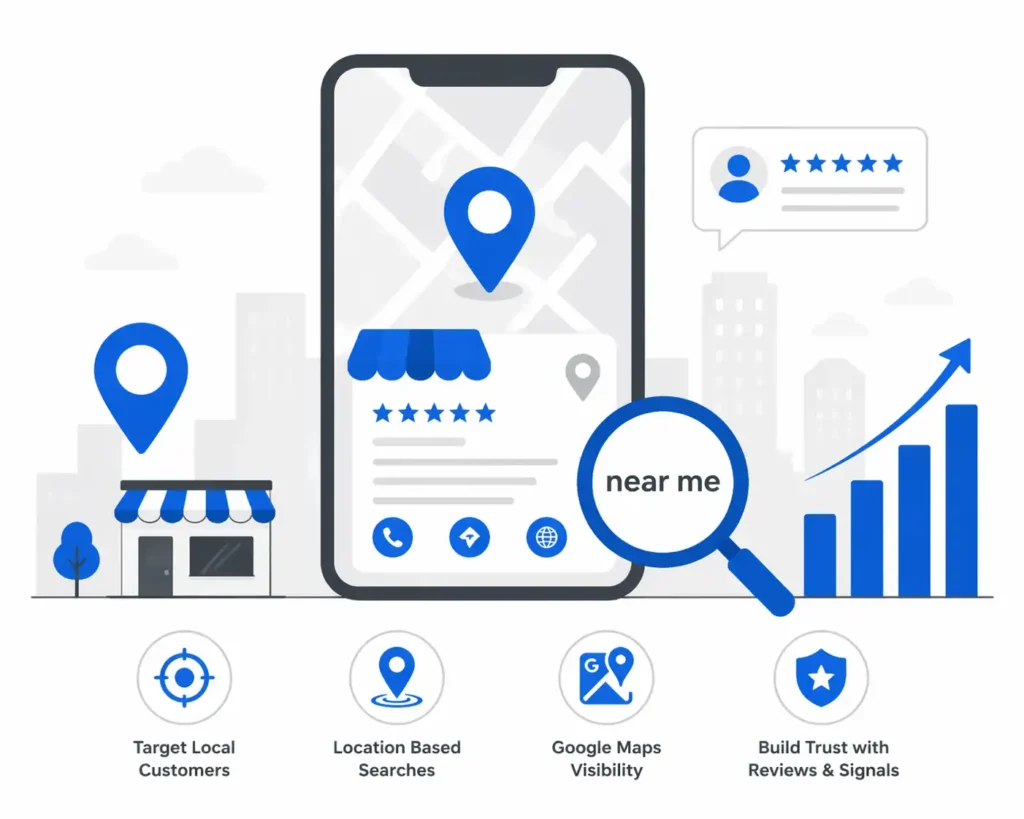
Local SEO focuses on improving your online presence to attract customers from a specific location. It helps businesses appear in local search results like “near me” or location based searches.
This type of SEO is essential for businesses that serve a physical location or a defined service area, such as agencies, restaurants, clinics or service providers. It also improves visibility on Google Maps and builds trust through reviews and local signals.
Important elements include:
- Google Business Profile Optimization
- Local keyword targeting
- NAP consistency (Name, Address, Phone number)
- Local citations and directory listings
- Customer reviews and ratings
- Location based landing pages
- Google Maps optimization
- Local backlinks
E-Commerce SEO
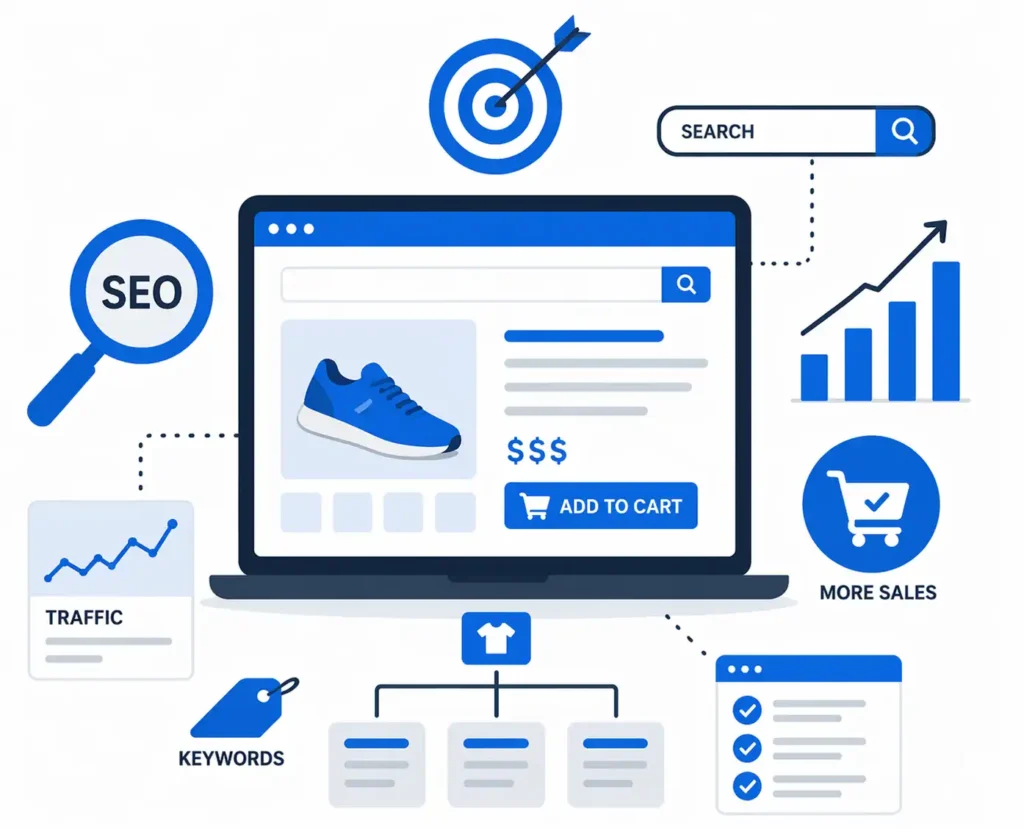
E-commerce SEO is the process of optimizing an online store to increase product visibility and drive sales through organic search. It helps potential buyers find your products when they search with purchase intent keywords.
This type of SEO is more complex because it deals with large websites, multiple product pages, and competition for transactional keywords. The goal is not just traffic, but conversion and sales.
Important elements include:
- Product page optimization
- Category page optimization
- Keyword research for buyer intent
- Unique product descriptions
- Technical SEO for large websites
- Internal linking (products and categories)
- Schema markup (product, price, reviews)
- Site speed optimization
- User experience (UX) improvements
Video SEO
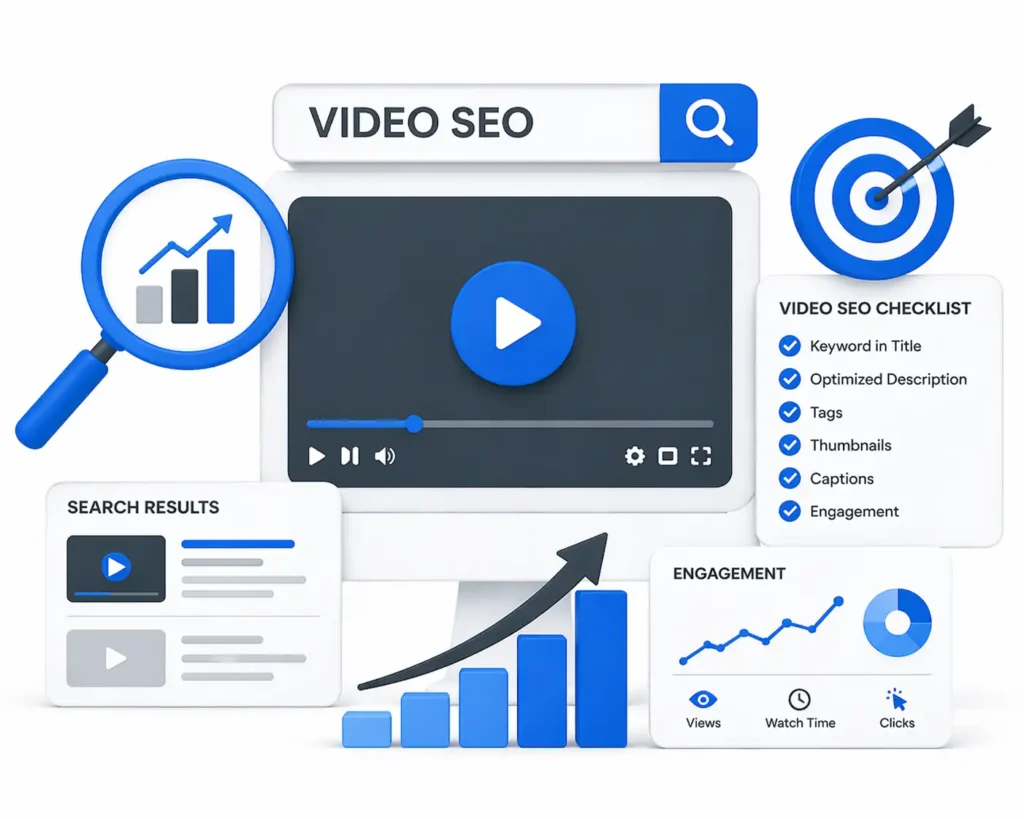
Video SEO is the process of optimizing video content so it ranks higher in search results on search engines like Google and on video-sharing platforms.
Videos are becoming a major part of search results and well optimized videos can drive high engagement traffic. This type of SEO focuses on both visibility and user interaction, such as watch time and clicks.
Important elements include:
- Keyword optimized video titles
- Detailed video descriptions
- Tags and hashtags
- Transcripts and captions
- Thumbnail optimization
- Video quality and engagement
- Embedding videos on websites
- Video sitemap
Image SEO
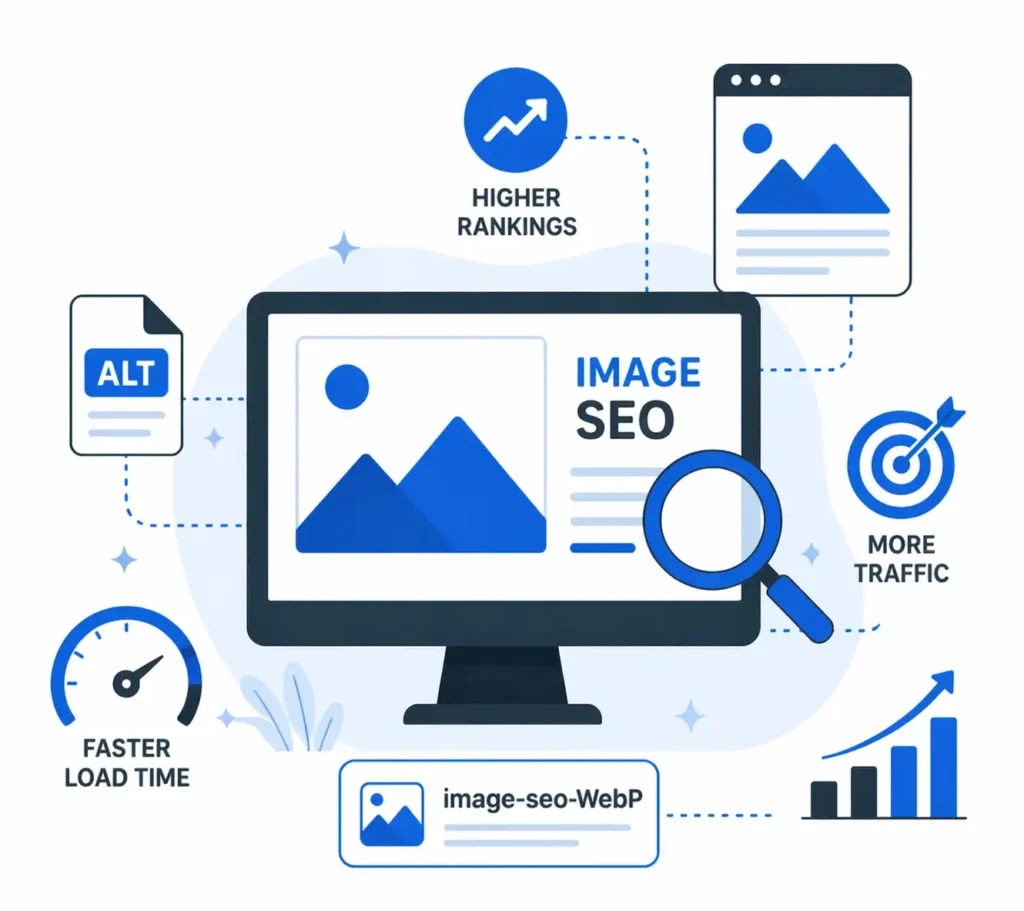
Image SEO involves optimizing images so they can rank in image search results and improve overall website performance.
Proper image optimization not only helps bring additional traffic but also improves page speed and user experience. It is an important part of on page and technical SEO.
Important elements include:
- Image file name optimization
- Alt text (descriptive tags)
- Image compression
- Proper formats (WebP, JPEG, PNG)
- Responsive images
- Image sitemap
- Lazy loading
- Relevant placement in content
International SEO
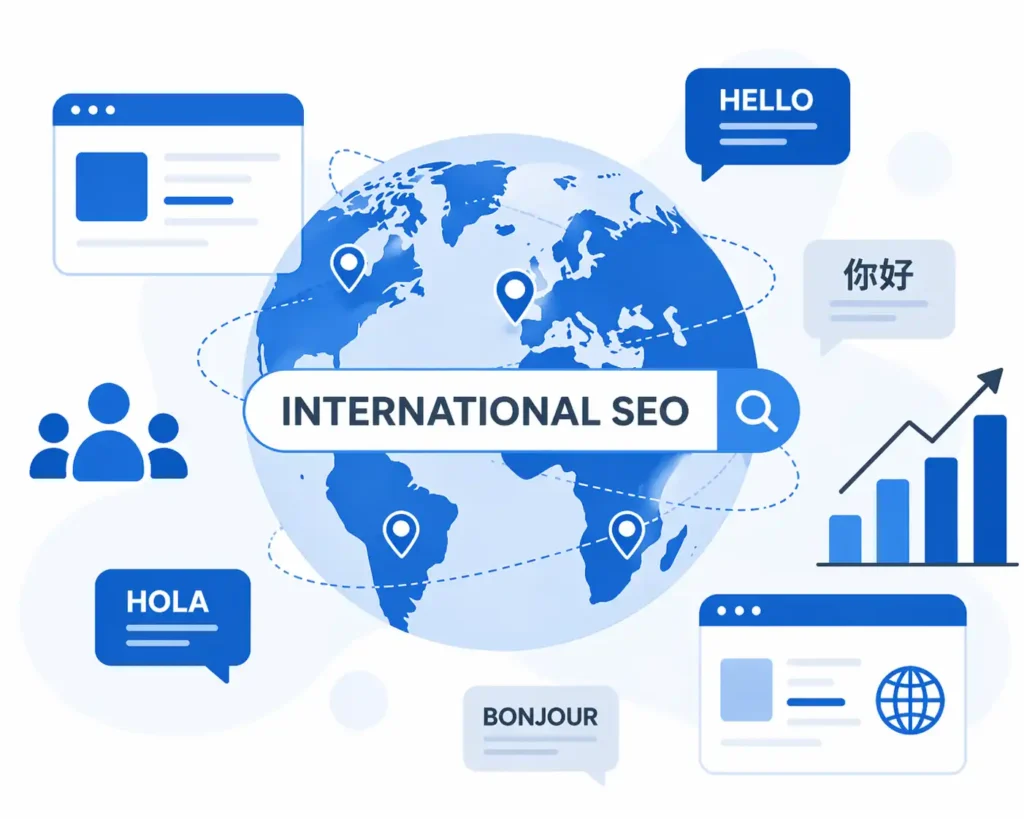
International SEO is used when a business wants to target users in different countries or languages. It ensures that the right content is shown to the right audience based on their location and language.
It requires careful planning to avoid duplicate content and to align with cultural and regional differences. It also helps global businesses create a better user experience by delivering localized content that feels relevant to each market.
Important elements include:
- Hreflang tags
- Country specific domains or subfolders
- Language targeted content
- Local keyword research
- Cultural adaptation
- Geo targeting settings
- Local backlinks
- Currency and regional settings
Voice SEO
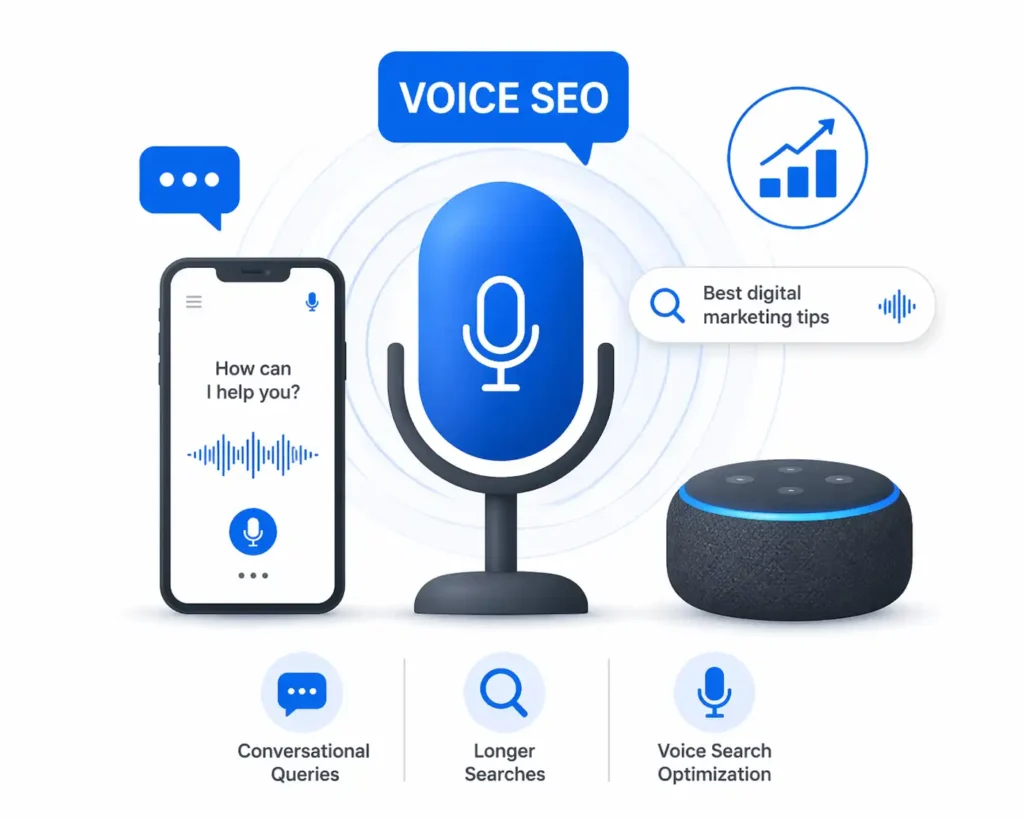
Voice SEO focuses on optimizing content for voice based searches made through devices like smartphones and smart assistants. These searches are usually conversational and longer than text searches.
This type of SEO is growing fast as more users rely on voice commands for quick answers.
Important elements include:
- Conversational keywords
- Question based queries
- Featured snippet optimization
- Fast loading pages
- Mobile responsive design
- Local SEO focus
- Structured data (schema markup)
YouTube SEO
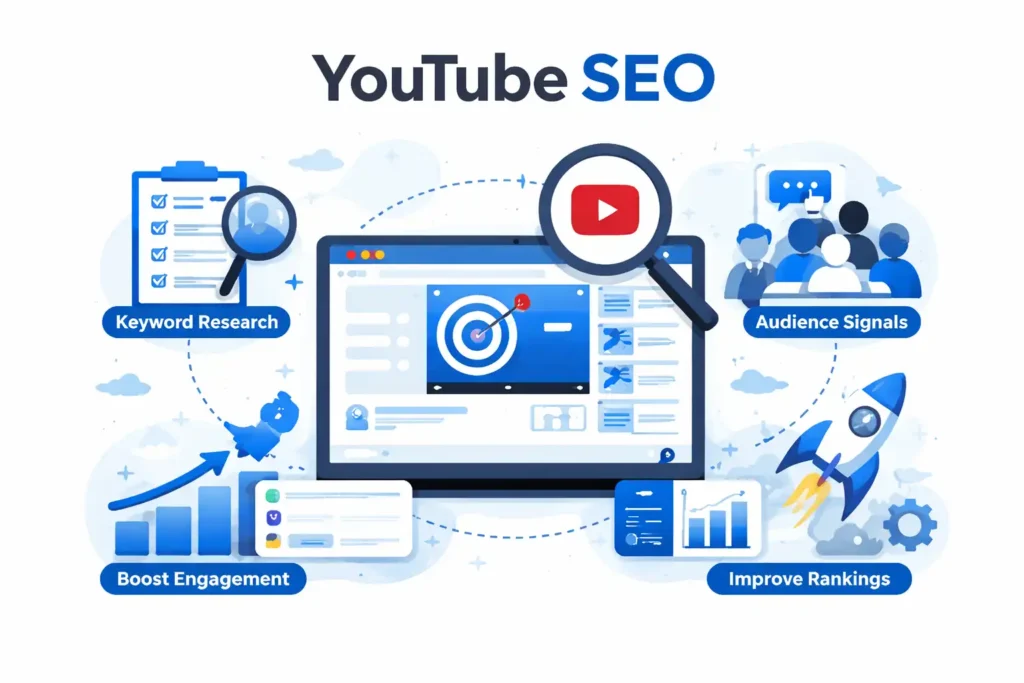
YouTube SEO is the process of optimizing videos to rank higher within video platforms. It focuses on improving visibility, increasing watch time and boosting engagement.
Since video platforms use their own algorithms, YouTube search engine optimization requires a mix of keyword optimization and audience behavior signals.
It also helps channels grow faster by improving discoverability through search results, suggested videos and recommendations.
Important elements include:
- Keyword rich titles
- Optimized descriptions
- Tags and categories
- Custom thumbnails
- Watch time optimization
- Engagement (likes, comments, shares)
- Channel optimization
- Playlist structure
Social SEO
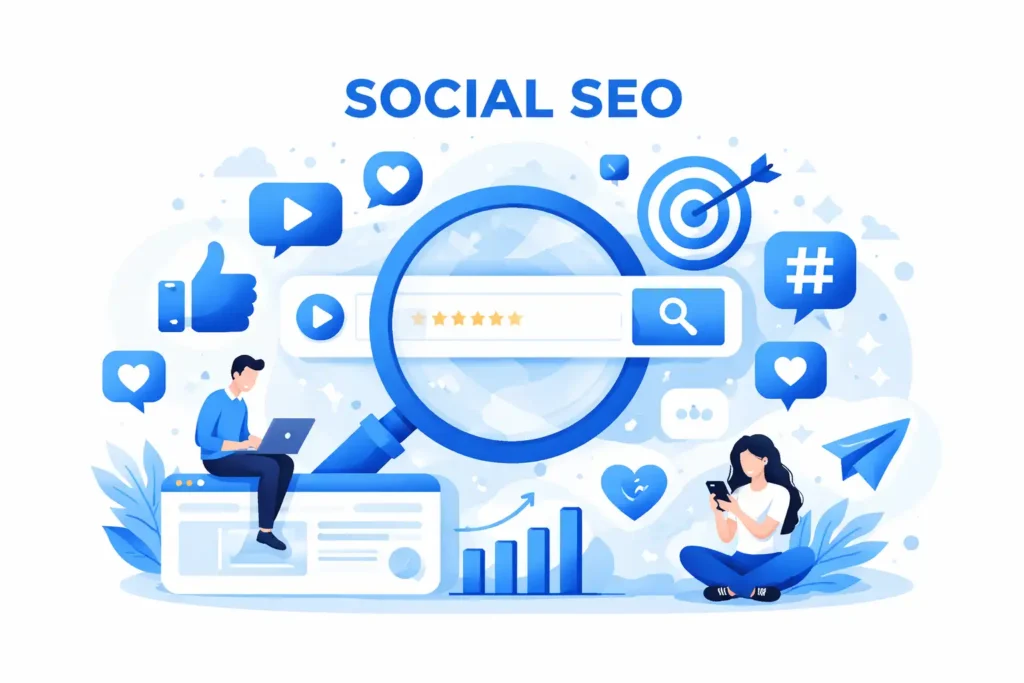
Social SEO refers to optimizing social media profiles and content to increase visibility both on social platforms and search engines. While social signals are not direct ranking factors, they help drive traffic, build brand awareness and support overall SEO performance.
According to recent studies,78% of global internet users use social media to research brands and products. About 46% of Gen Z users worldwide use social platforms to find information online.
Important elements include:
- Profile optimization
- Consistent branding
- Content sharing strategy
- Engagement (likes, shares, comments)
- Hashtag optimization
- Social traffic signals
- Link sharing
- Influencer collaborations
Content SEO
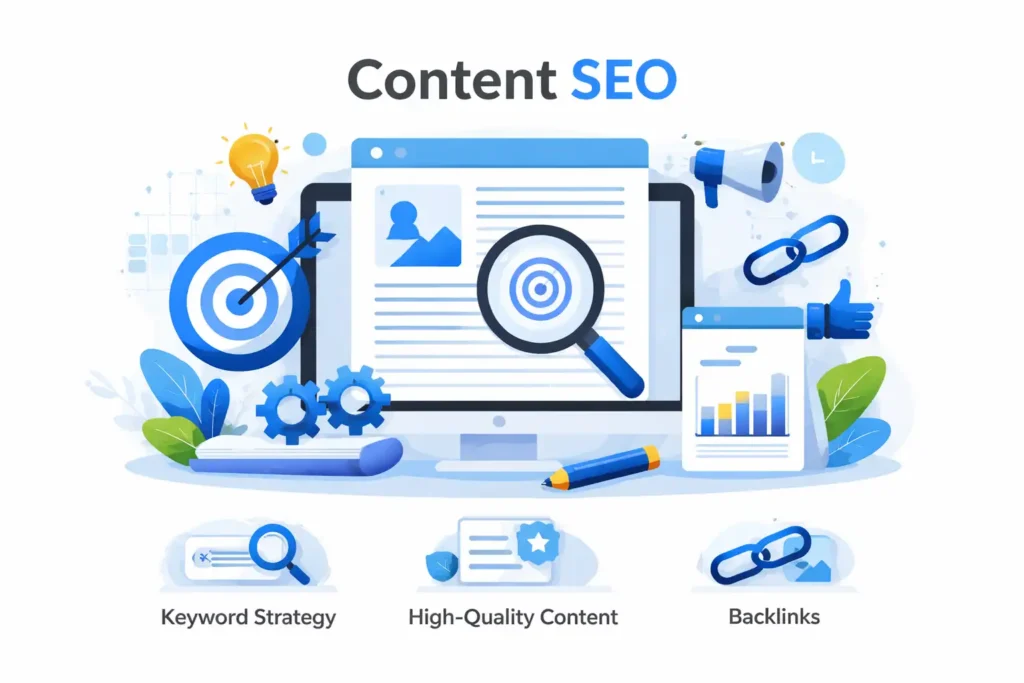
Content SEO focuses on planning, creating and optimizing content to rank in search engines and meet users’ intent. It involves more than just writing; it includes keyword strategy, content structure and ongoing updates.
High quality content builds authority, attracts backlinks and drives long term traffic. It also improves user engagement by delivering valuable information that keeps visitors on the page longer and encourages them to take action.
Important elements include:
- Keyword research and targeting
- High quality content creation
- Search intent optimization
- Content structure (headings)
- Internal linking
- Content updates and freshness
- Readability and UX
- Content depth and coverage
- Topic clusters and authority
How to Choose the Right SEO Service for Your Business?
Selecting the right SEO service depends on your business goals, current website condition and target audience. Every business is different, so there is no one size fits all approach. Some websites need better content, while others struggle with technical issues or a lack of visibility.
The first step is to understand what your website is missing. For example, if your website has good content but is not ranking, you may need off page SEO. If your website is slow or not mobile responsive, technical SEO becomes important.
It is important to look at your business type and target market. If you run a local business, local SEO will help you reach nearby customers. If you sell products online, eCommerce SEO is the right choice. Businesses getting global audiences should focus on international SEO.
By matching your goals with the right SEO type, you can invest in services that actually bring results instead of wasting time and budget on the wrong strategy.
How is SEO different from AEO and GEO?
SEO, AEO and GEO all aim to improve online visibility, but they focus on different types of search behaviors.
SEO (Search Engine Optimization) is about ranking your website higher on traditional search engines like Google. It focuses on keywords, backlinks and website optimization to drive organic traffic through search result pages.
AEO (Answer Engine Optimization) focuses on providing direct, clear answers to user questions. Instead of just ranking pages, it helps your content appear in featured snippets or voice search results where users get instant answers.
GEO (Generative Engine Optimization) is designed for AI driven search platforms. It focuses on making your content understandable and useful for AI tools so they can include your information in generated responses.
In short, SEO helps you rank, AEO helps you answer and GEO helps you get featured in AI generated results.
Closing Thoughts
SEO is not a quick fix. It is a long term strategy that builds your online presence step by step. Many businesses expect fast results, but real growth comes from steady work and smart planning. If you focus on quality, user experience and clear content. SEO starts to work in your favor. In my view, the brands that win online are not the ones who chase shortcuts but the ones who stay consistent and improve over time.


