

What is White Hat and Black Hat SEO?
 usman
usman
 Published: June 18, 2026
 7 Min Read.


 Listen to this article in Murfi's Voice.
Are you wondering why your website is not ranking even after publishing content regularly? Why do some competitors keep showing up on top while your traffic stays low?
The issue is not effort but the type of SEO strategy being used. Many websites unknowingly follow the wrong practices or mix safe and risky methods. This leads to unstable rankings, sudden drops and sometimes penalties from search engines.
According to industry reports, websites hit by Google penalties can lose 50% to 95% of their organic traffic within 24-72 hours of receiving penalties, and recovery can take months or longer.
Key Highlights:
- White Hat SEO follows search engines’ rules and focuses on long-term growth
- Black Hat SEO uses shortcuts that can lead to penalties
- Google rewards quality content and user-focused strategies
- Wrong SEO practices can harm your website ranking permanently
Understanding the difference between White Hat SEO and Black Hat SEO can protect your website from risks and help you build steady, long-term organic traffic.
What is White Hat SEO?
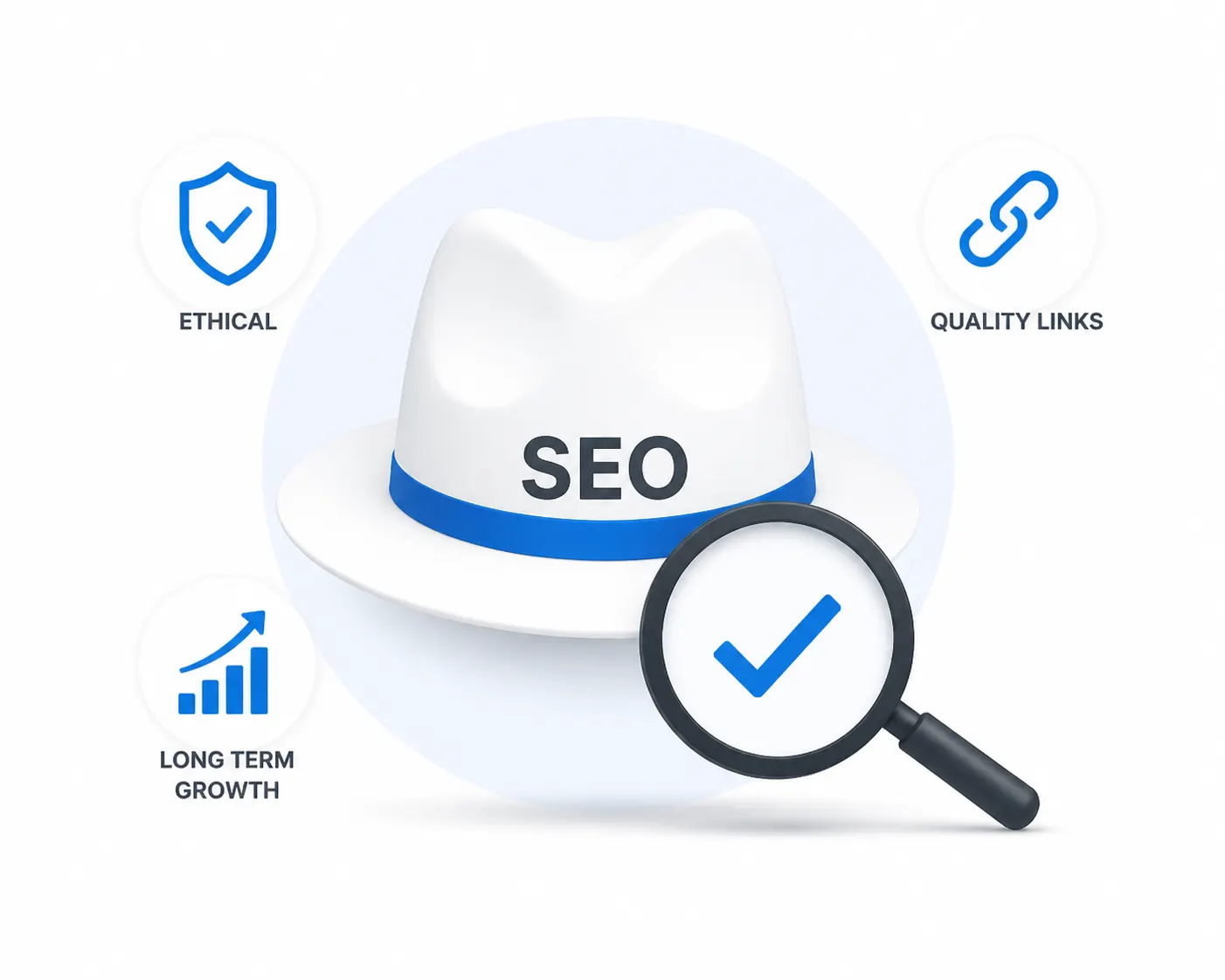
White Hat SEO refers to techniques that follow search engine guidelines. These methods focus on users first, not shortcuts. The goal is simple: create value for visitors and earn rankings naturally.
Common white hat SEO practices include:
- High-quality and original content writing
- Proper keyword usage in a natural way
- Mobile-responsive website design
- Fast-loading pages
- Internal linking structure
- Earning backlinks from trusted websites
- Improving user experience (UX)
White hat SEO takes time, but it builds strong and stable rankings. For example, if you write helpful blog content that answers real user questions and optimise your website properly, Google gradually rewards your pages with better visibility.
Why Does White Hat SEO Work?
Search engines like Google prioritise websites that genuinely help people. When your content is clear, useful and answers real questions, users spend more time on your website. They read more pages, engage with your content and start trusting your brand. This behaviour tells search engines that your website is valuable.
White Hat SEO does not bring instant rankings, but it creates long-term success. Instead of chasing quick tricks, it focuses on building strong authority over time. When your website consistently provides helpful content, it slowly earns better rankings that stay stable and grow naturally.
What is Black Hat SEO?
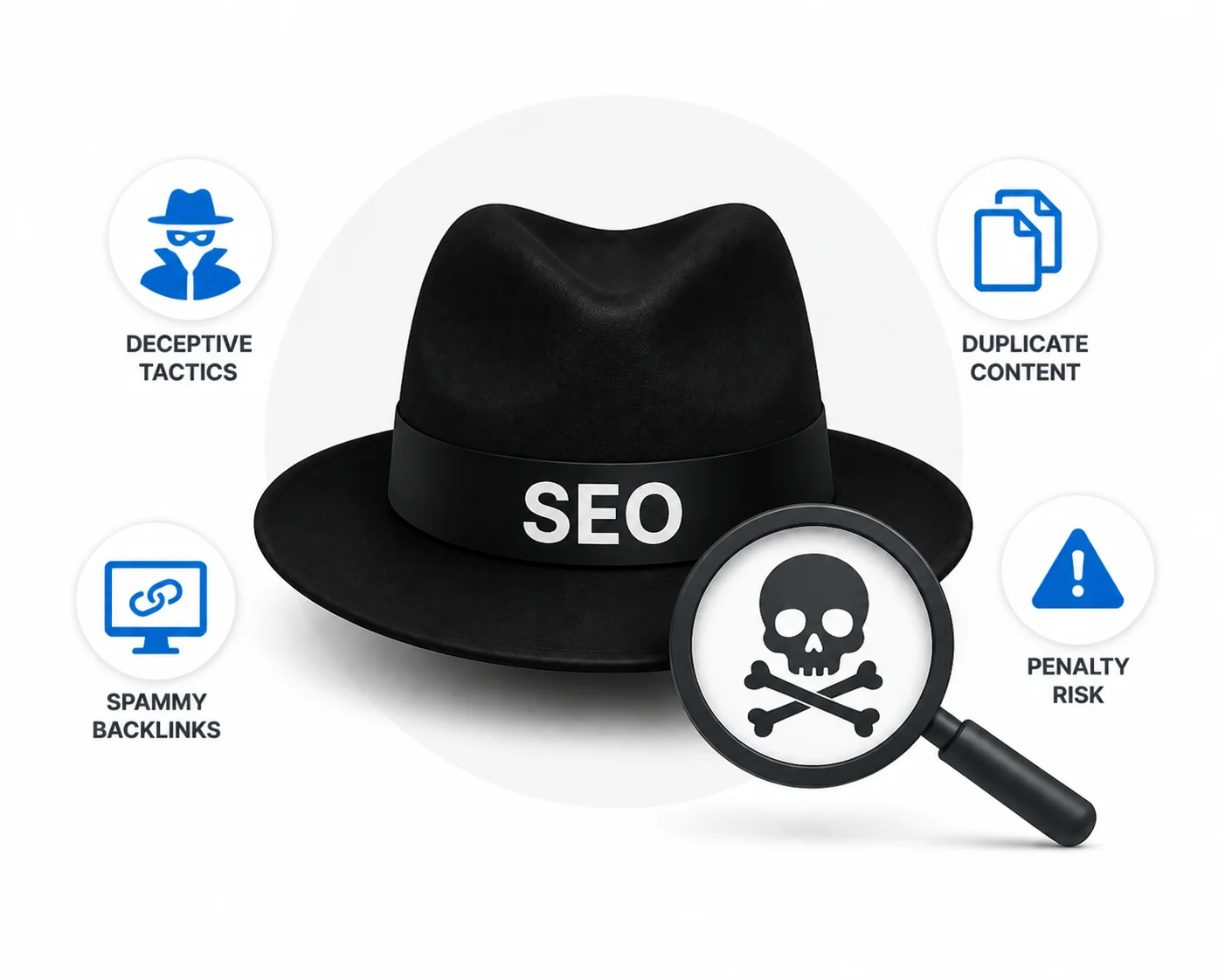
Black Hat SEO refers to practices that break search engines’ rules to get quick rankings. These methods focus on manipulating algorithms instead of helping users. At first, Black Hat SEO can bring fast traffic. But it does not last.
Common Black Hat SEO techniques include:
- Keyword stuffing (overusing keywords naturally)
- Hidden text or links
- Cloaking (showing different content to users and search engines)
- Buying low-quality backlinks
- Using spammy websites for link building
- Duplicate content from other sites
- Automated content generation without value
These methods may look effective for a short time, but search engines detect them.
Why is Black Hat SEO Risky?
Google updates its algorithm regularly to catch websites that try to manipulate rankings. If your website uses risky or spam-like techniques, it can quickly get flagged. This may result in lower rankings or even removal from search results. In some cases, the entire website can lose visibility overnight.
Once a penalty happens, recovery is not simple. Traffic can drop suddenly, and fixing the issue takes time, effort and proper SEO cleanup. Some websites never fully regain the original rankings, especially if the damage is severe or repeated.
How Google Detects Black Hat SEO?
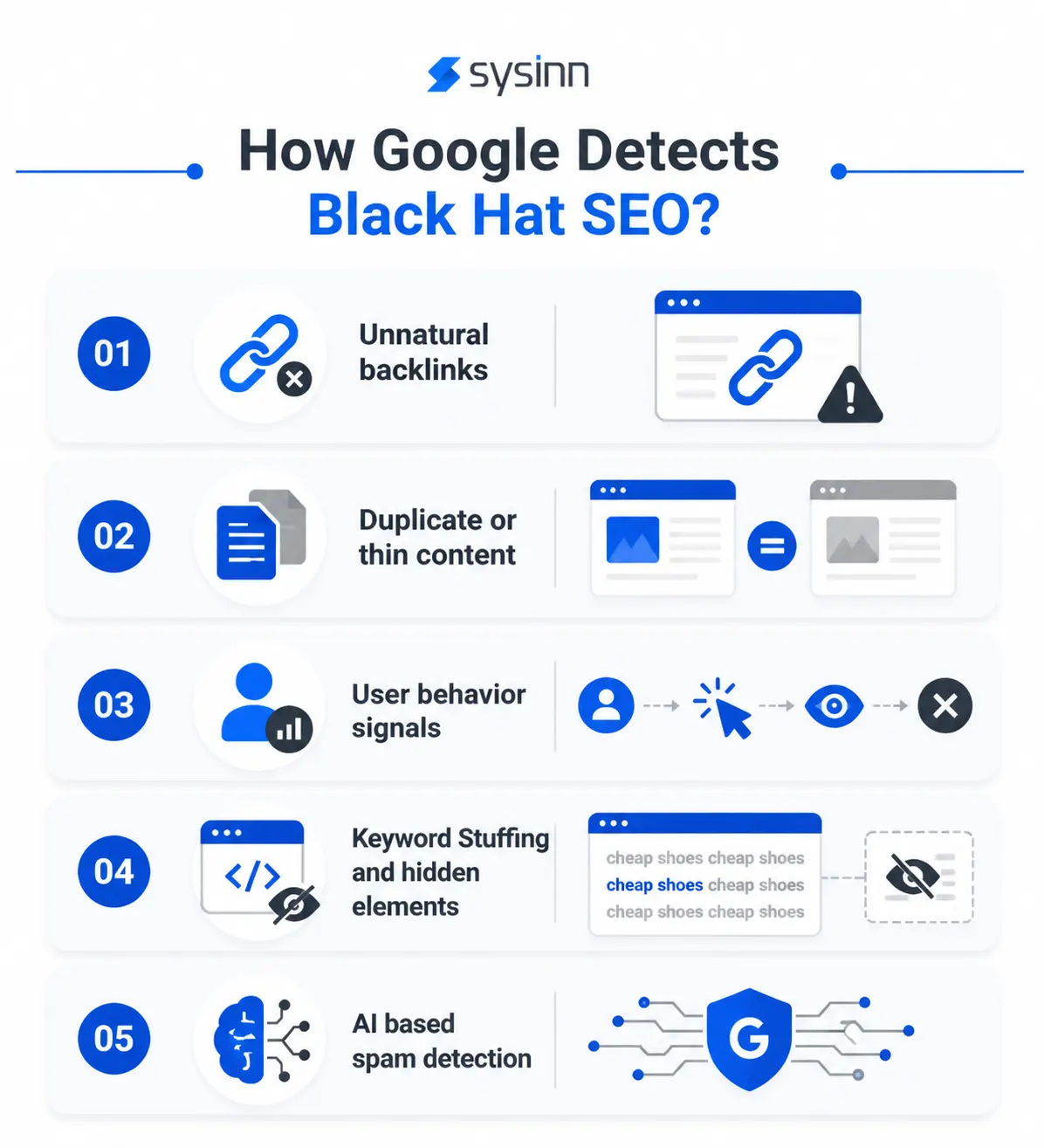
Google uses smart systems and regular updates to catch websites that try to cheat rankings. It looks at different signals to understand if a website is providing real value or using manipulative tactics.
When Google finds suspicious activity, it can reduce your rankings or remove your pages from search results.
Here are some ways Google detects Black Hat SEO:
Unnatural backlinks
Google checks link patterns. Too many low-quality or irrelevant links can raise a red flag.
Duplicate or thin content
Copying content or publishing low-value pages makes your website look unreliable.
User behaviour signals
If users leave your website quickly or do not interact, it shows poor content quality.
Keyword Stuffing and hidden elements
Overusing keywords or hiding text and links is easy for Google to detect.
AI-based spam detection
Google uses advanced systems to identify unnatural content and spam tactics.
New Black Hat SEO Techniques Driven by AI
AI has changed how content is created and published. While it helps many businesses grow, some use it in the wrong way to manipulate search rankings. These new tactics may look smart, but they still go against search engine guidelines.
Mass AI Content Without Value
Some websites publish a large amount of AI-generated content in a short time. The goal is to rank for many keywords. But most of this content lacks depth and does not help users. Google can detect low-value pages and reduce their visibility.
Fake E-E-A-T Signals
Some websites try to create fake expertise, experience, authority and trust signals. They generate fake author profiles, reviews or credentials to look credible. Search engines are improving their systems to verify real trust signals.
Automated Link Building At Scale
AI tools are now used to create backlinks in bulk. These links often come from low-quality or irrelevant websites. This creates an unnatural link profile, which can lead to penalties instead of better rankings.
AI Spun and Rewritten Content
Some people use AI to rewrite existing content from other websites. It may look unique on the surface, but the meaning stays the same. Search engines are getting better at detecting this type of duplication.
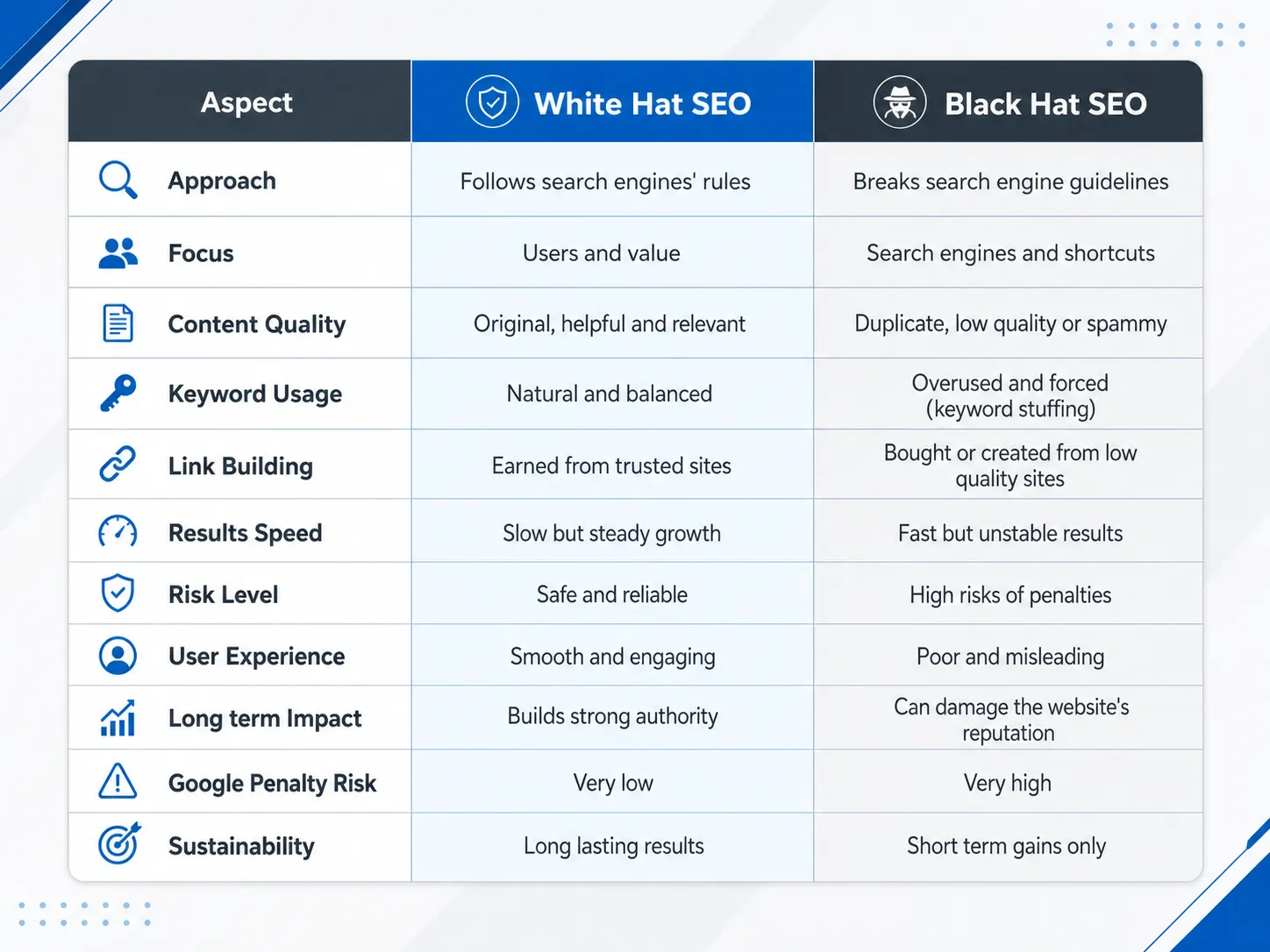
White Hat SEO vs Black Hat SEO
If you are unsure which SEO method is right, this simple comparison will help you see the key differences.
Best SEO Strategy for Long-Term Growth
A strong SEO strategy always follows White Hat practices. Search engines like Google are strict about how websites grow. They reward sites that follow clear guidelines and focus on real user value.
According to Google’s official guidance, websites with helpful, people-first content are more likely to rank well over time.
Focus on:
- Writing helpful and original content
- Understanding user search intent
- Building natural backlinks
- Improving website speed and structure
- Keeping content updated
- Creating a smooth user experience
When your website helps users, search engines automatically reward it.
Closing Thoughts
SEO is not about shortcuts. It is about building trust with both users and search engines. White Hat SEO takes time, but it creates long-term value. Black Hat SEO carries risks that can damage your online presence. A strong digital strategy always prioritises quality, consistency and user experience.
Build a Safe and Strong SEO Strategy with Sysinn
If your website is not getting the results you expect, the issue may not be effort, but the strategy behind it. Choosing the right SEO approach can change how your business performs online.
Sysinn focuses on ethical SEO practices that help businesses grow without risk. From keyword planning to content optimisation and technical improvements, every step is designed for long-term success. Start building a strong online presence with a strategy that works for the future. Contact us and let’s get started.
Key Takeaways
- White Hat SEO focuses on helping users.
- Black Hat SEO uses shortcuts that harm your website.
- Good SEO takes time, but it gives long-term results.
- Search engines reward useful, clear and original content.
- Poor SEO practices can cause sudden ranking drops.
- High-quality backlinks help improve your website’s authority.
- Spammy links and keyword stuffing can lead to penalties.
- User experience plays a big role in SEO success.
- AI-based black-hat tactics are increasing, but still risky.
- A safe and strong SEO strategy always focuses on long-term growth.


