

How Can I Market My Business?
 Zaryab Khan
 Published: June 4, 2026
 10 Min Read.


 Listen to this article in Murfi's Voice.
Starting a business is hard. Getting customers can feel even harder. Many business owners offer great products or services but still struggle to attract leads, make sales, or build brand awareness.
You spend time, money, and effort on marketing, yet the results often fall short of expectations. The problem is not always the quality of your business. In many cases, it is the marketing strategy behind it.
You do not need a huge budget to market your business successfully. With the right approach, you can reach the right audience, build trust, and turn prospects into customers.
Key Highlights:
- Know your target audience before spending money on marketing.
- Build a strong online presence with a website and SEO.
- Create useful content that answers customer questions.
- Track results and improve your marketing based on data.
In this guide, you’ll learn what business marketing is, why it is important and also learn 10 best strategies to market your business.
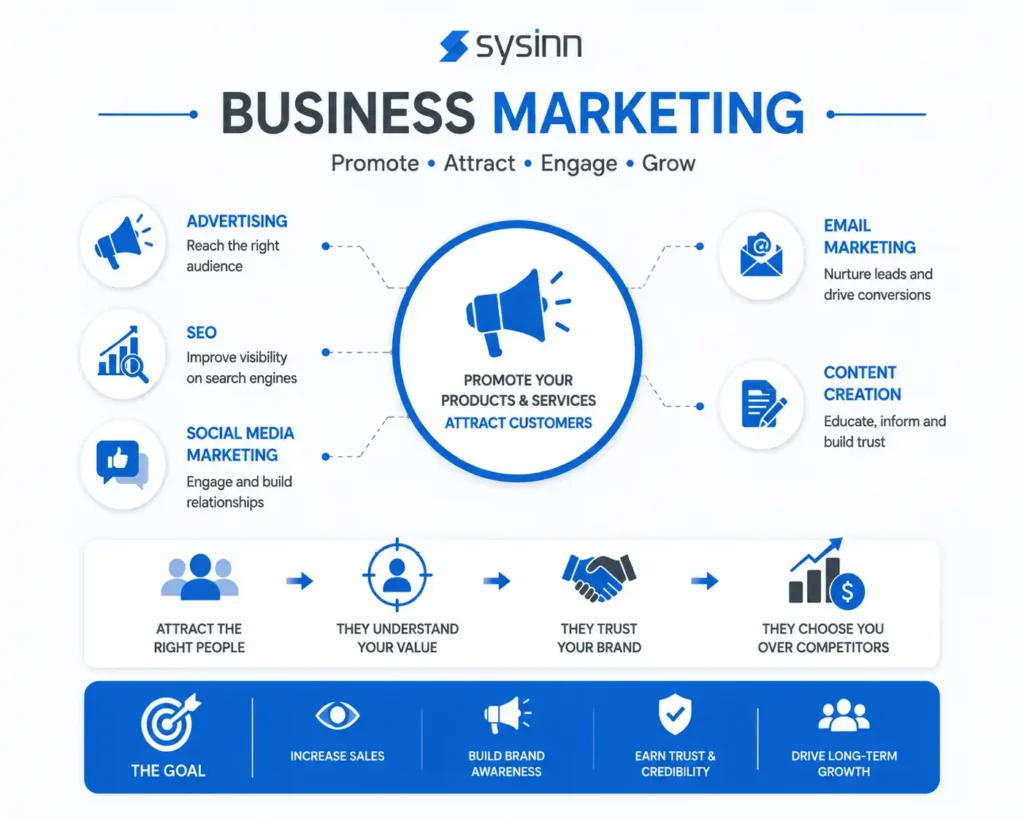
Business marketing is the process of promoting your products or services to attract potential customers and encourage them to buy from you. It includes activities such as advertising, SEO, social media marketing, email marketing and content creation.
The goal of business marketing is not just to increase sales but also to build brand awareness and trust. When done well, marketing helps the right people find your business, understand your value and choose your products or services over the competition.
Why is Marketing Important?
No matter how good your product is, customers need to know that your business exists. Today, people search online before making buying decisions.
They compare options, read reviews, visit websites and check social media profiles before contacting a business.
Marketing helps you:
- Increase brand awareness
- Generate leads
- Build trust
- Grow sales
- Retain customers
- Stay competitive
The businesses that market consistently often outperform those that rely only on referrals.
A 2025 survey by Constant Contact found that small businesses are spending more time and money on marketing, but confidence in marketing effectiveness has decreased.
The study highlights that many businesses continue investing in digital marketing and AI tools while struggling to measure results and identify the most effective strategies for growth.
10 Best Strategies to Market Your Business Successfully
Growing a business takes more than offering a great product or service. You need a marketing strategy that helps the right people find your business, trust your brand and choose you over competitors.
These strategies can help you reach more customers and support long term business growth. Here is how to market a business:
1. Understand Your Target Audience
One of the biggest marketing mistakes businesses make is trying to reach everyone. When your message speaks to everyone, it may connect with no one.
People are more likely to engage with brands that understand their needs, challenges and goals. Before you invest time or money in marketing, take a closer look at your ideal customers. Ask yourself:
- Who are they?
- What problems are they trying to solve?
- What motivates them to make a purchase?
- Which platforms do they use most often?
- What information do they look for before choosing a business?
The answer will help you create marketing that feels relevant instead of generic.
For example, a local roofing company needs a completely different approach than an online fashion store. Their customers have different needs, search habits and buying journeys.
The better you understand your audience, the easier it becomes to create marketing that attracts the right people and drives better results.
2. Build a Professional Website
Your website may be the first impression customers have of your business. A modern website should:
- Load quickly
- Work well on mobile devices
- Be easy to navigate
- Include clear service information
- Display contact details
- Feature customer reviews
- Have strong calls to action
Many small businesses focus heavily on social media but neglect their websites. That can be a costly mistake because your website is the digital home of your brand.
3. Invest in Search Engine Optimization (SEO)
SEO helps your website appear in search engine results when people look for products or services like yours. Unlike paid advertising, SEO can continue bringing traffic long after content is published.
Research shows that 72% of small and medium sized businesses believe SEO has a medium to high impact on business growth. Yet many businesses still do not invest enough in their online presence.
SEO includes:
Keyword Research
Find out what your customers are searching for online. Target keywords that match buyer intent rather than broad terms with heavy competition.
Content Optimization
Create pages and blog posts around relevant topics. Answer common customer questions clearly and completely.
Technical SEO
Make sure your website:
- Loads faster
- Uses secure HTTPS
- Works on mobile devices
- Has a clean site structure
Local SEO
If you serve a specific area, local SEO should be a priority. Optimize your business listings, collect reviews and create location focused content. Local visibility can help small businesses compete with larger brands.
4. Create Helpful Content
People buy from businesses they trust. One of the best ways to build trust is through content marketing. Useful content positions your business as a reliable source of information.
Consider creating:
- Blog posts
- Guides
- Case studies
- Videos
- FAQs
- Industry insights
Content marketing works because it helps customers before asking them to buy. Many successful businesses use content to answer customer questions at every stage of the buying journey.
5. Use Social Media the Right Way
Social media can help businesses reach large audiences, but success requires consistency. A common mistake is trying to be active on every platform.
Choose platforms based on where your audience spends time.
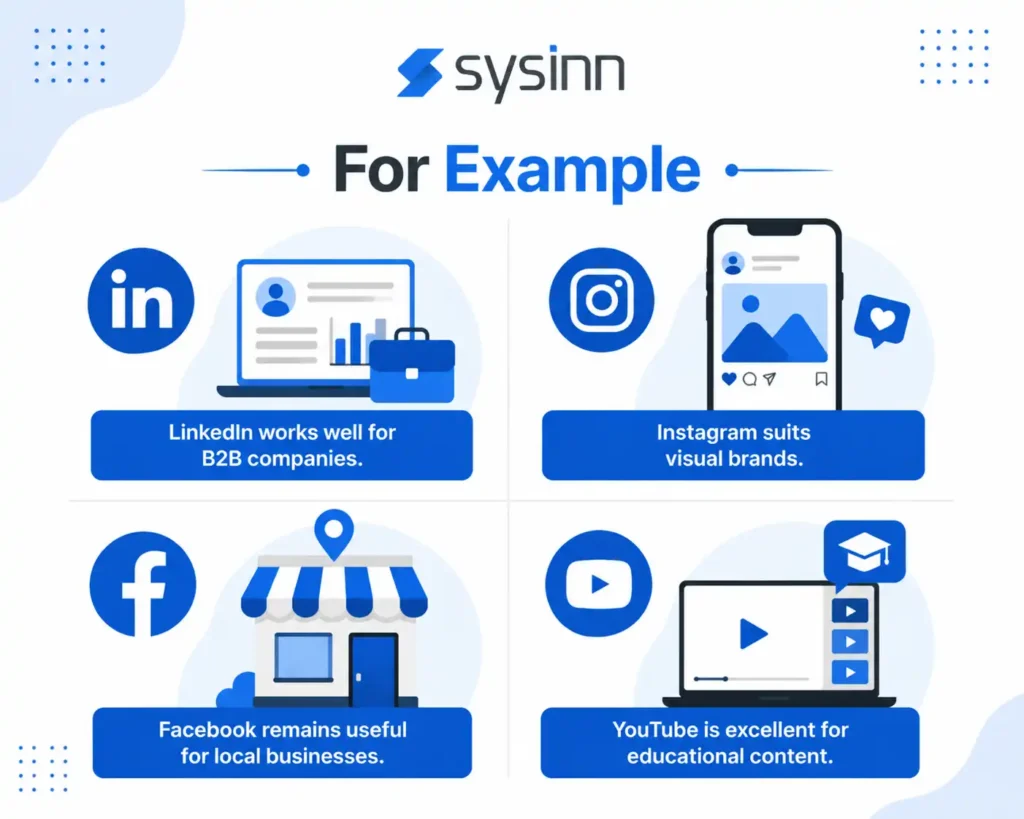
Research shows that social media advertising continues to be one of the most widely used marketing channels among small businesses.
Share content that educates, entertains, solves problems and builds trust. Avoid making every post a sales pitch.
6. Collect and Use Customer Reviews
People trust other customers more than marketing messages. Before choosing a business, many buyers read reviews to learn about real experiences.
Positive reviews can reassure potential customers that your business delivers quality products, reliable service and a good customer experience.
Make it a habit to ask satisfied customers to share their feedback on platforms such as:
- Industry specific directories
- Relevant review website
Reviews do more than build credibility. They also help your business stand out in search results and can improve local search visibility.
Do not ignore negative reviews either. Respond politely, address concerns and show that you value customer feedback. A professional response can leave a stronger impression than the review itself.
The more genuine reviews your business earns, the easier it becomes to build trust and attract new customers.
7. Build an Email Marketing List
Many businesses focus on social media followers but overlook email marketing. That is risky because you do not control social media platforms. An email list gives you direct access to your audience.
Research shows that email remains one of the most widely used digital communication channels worldwide. In 2025, the number of global email users reached approximately 4.59 billion, and daily email traffic is expected to exceed 376 billion messages.
These figures highlight the continued importance of email for communication, customer engagement and digital marketing despite the growth of messaging apps and social media platforms.
Use email to:
- Share updates
- Promote offers
- Send newsletters
- Educate subscribers
- Nurture leads
Offer something valuable in exchange for email signups, such as:
- Free guides
- Checklists
- Templates
- Discounts
8. Run Paid Advertising Carefully
Paid advertising can deliver fast results when managed properly. Popular options include:
- Google Ads
- Facebook Ads
- Instagram Ads
- LinkedIn Ads
Before spending money on ads, make sure your website is optimized, your offer is clear and your landing pages convert visitors.
Many businesses waste advertising budgets because they focus on traffic instead of conversions. Start with smart campaigns, test different approaches and scale what works.
9. Use Video Marketing
Video has become one of the most effective ways to connect with potential customers. People may prefer watching a quick video over reading a long article because it is easier to consume and understand.
Businesses can use video to showcase products, answer common questions, share customer experiences, explain services or give audiences a look behind the scenes. This type of content helps people get familiar with your brand and builds trust before they make a purchase.
Studies show that more small businesses are investing in video because it helps increase engagement and improve customer understanding. The good news is that you do not need a professional studio or expensive equipment to create effective videos.
A clear message and useful information matter more than perfect production quality. In many cases, simple and genuine videos create stronger connections with audiences because they feel more authentic and relatable.
10. Focus on Customer Retention
Finding new customers is important, but keeping existing ones is often what drives long term business growth. Many companies invest heavily in customer acquisition while missing opportunities to strengthen relationships with existing customers.
You can improve customer retention by:
- Offering loyalty and rewards programs
- Sending follow up emails after a purchase
- Providing exclusive discounts and special offers
- Delivering excellent customer service
- Personalizing communication and recommendations
Customers who have a positive experience with your business are more likely to buy again and recommend your brand to others. Over time, loyal customers can become a valuable source of repeat revenue and referrals.
Since retaining an existing customer typically costs less than acquiring a new one, customer retention should be a key part of any marketing strategy.
Ways to Promote Your Business Locally
Promoting your business locally means making it easy for nearby customers to find and trust you. It helps you reach people who are already looking for your products or services in your area.
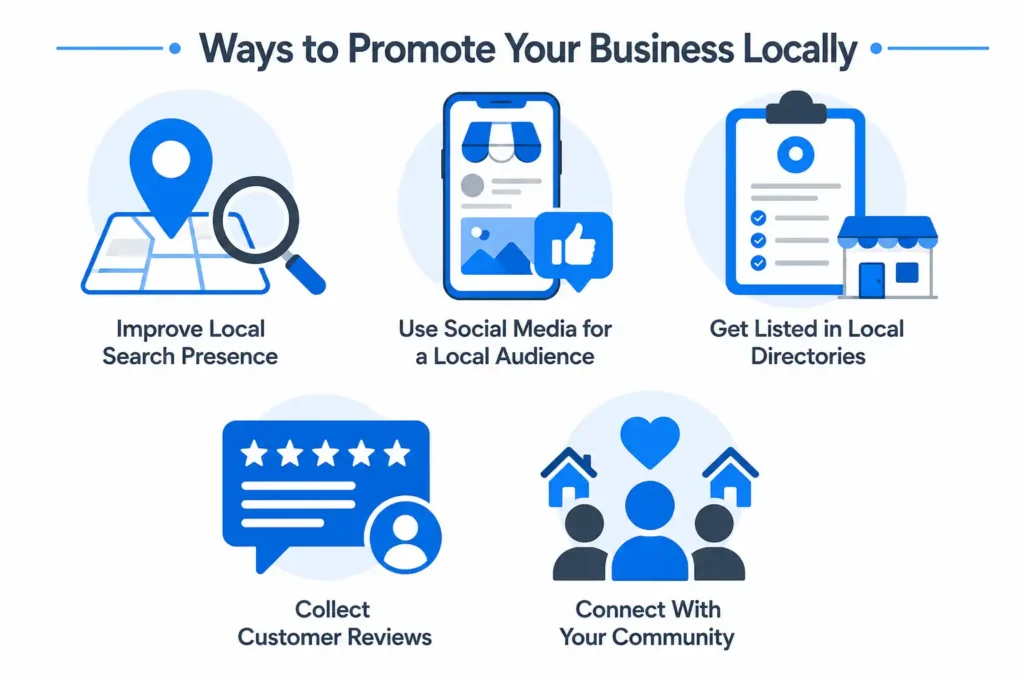
Improve Local Search Presence
Set up and optimize your Google Business Profile, add correct contact details and use local keywords so people can find you in nearby searches.
Use Social Media for a Local Audience
Post updates, offers and location based content on social media to connect with people in your area and increase visibility.
Get Listed in Local Directories
Add your business to local online directories and keep your name, address and phone number consistent across all platforms.
Collect Customer Reviews
Ask happy customers to leave reviews. Good feedback builds trust and helps new customers choose your business.
Connect With Your Community
Take part in local events or collaborations to make your brand more familiar and increase word of mouth referrals.
How can You Increase Traffic to Your Website?
Increasing traffic to your website starts with making your business easy to find online. Most people use search engines when they need information, products or services. If your website is visible there, you have a better chance of getting visitors.
SEO helps you do this by improving your website’s ranking on Google. Writing helpful content, using the right keywords and keeping your website simple and user friendly all support steady traffic growth.
You can also bring more visitors through social media, email marketing and online ads. Sharing useful posts on social platforms helps more people discover your brand.
Email updates bring past visitors back to your website. Paid ads can also help you reach people who are already searching for what you offer. The main focus should be to share useful information and stay active where your audience spends time.
Closing Thoughts
Marketing a business is not about being everywhere or spending the most money. It is about reaching the right people with the right message at the right time.
The businesses that grow steadily are usually the ones that stay consistent, understand their audience and focus on providing value. Trends will change, platforms will evolve and new tools will appear, but trust remains the foundation of successful marketing.


